
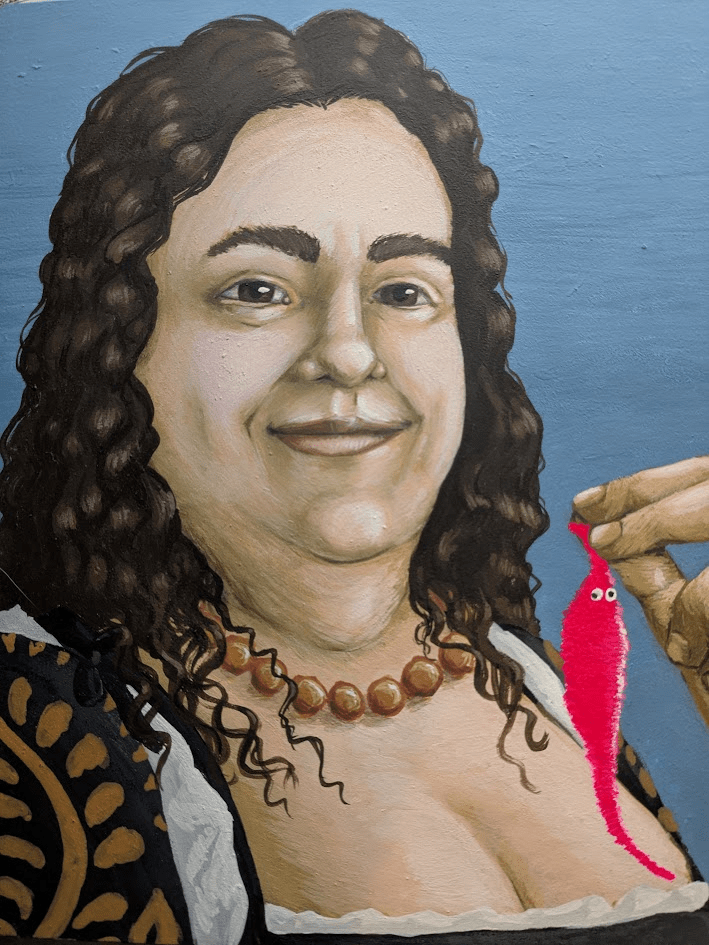
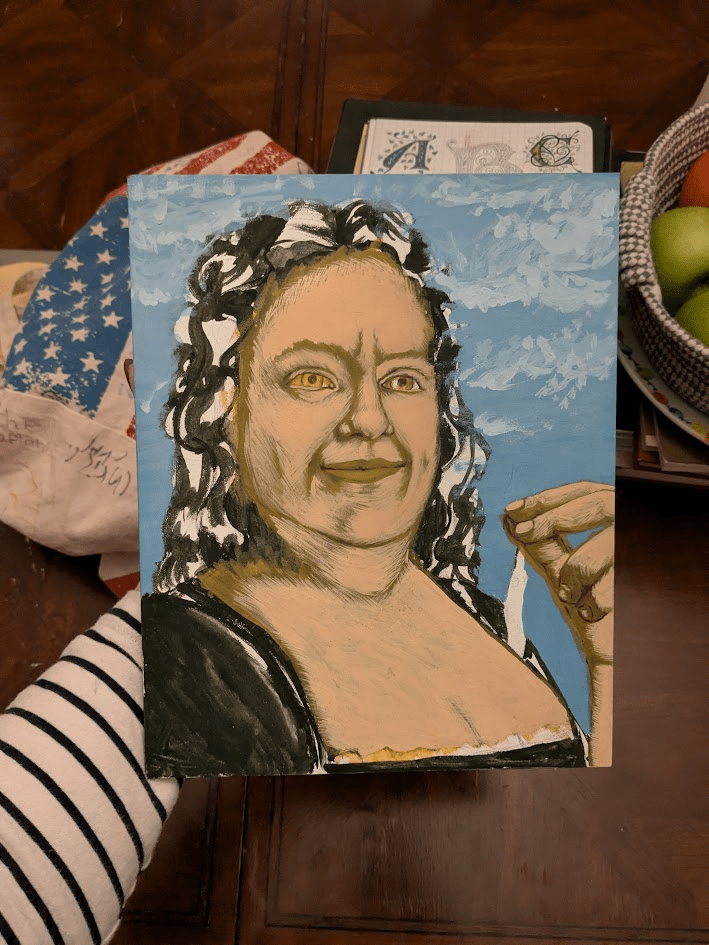
This piece marks my first full egg tempera portrait! It was made as a gift for a friend elevate to the Order of the Pelican.
This portrait was made following a tutorial by the wonderful Painting the Light on Youtube, this one focusing on the techniques used by Botticelli. (I am far from a master, but it is interesting to study the specific techniques used historically with this medium).
Egg tempera is a paint made by combining pigments (dry powders) with egg yolk to bind the color to the board. No, it doesn’t smell! The paint is remarkably unlike working with oil– it’s often dry within seconds of being applied to the board. This means that color blending is usually achieved through optical blending (where colors are placed close to one another and the viewer perceives them as one hue). Crosshatching with very fine strokes is a common technique, and can be seen in historical works.
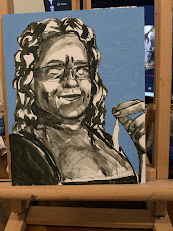
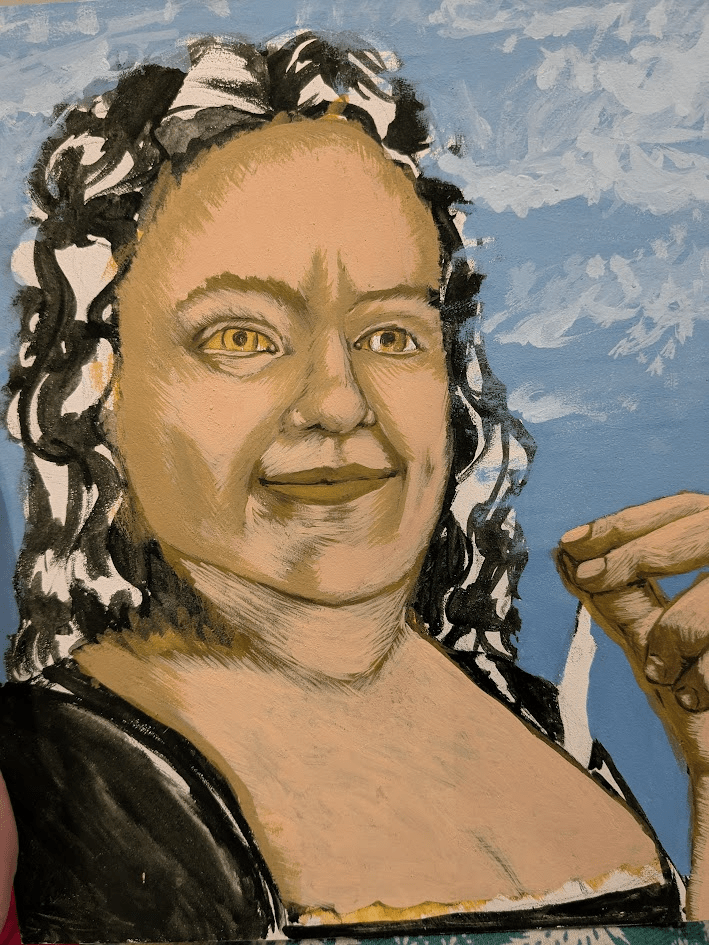
Following along with Botticelli’s technique was absolutely a lesson in trusting the process. It began with a grayscale underpainting to establish areas of shadow. Then a deep tone of yellow ochre with green was added. This tone should serve as a shadow for the piece. However, I later found it too starkly dark, and replaced with a lighter tone. As I’m beginning to research pigments more, I suspect my green was too dark and intense (I used chromium oxide, but green earth/terre vert would be the most common for this purpose). My current set of pigments have been chosen based on availability, cost, and toxicity, and don’t reflect a period palette.
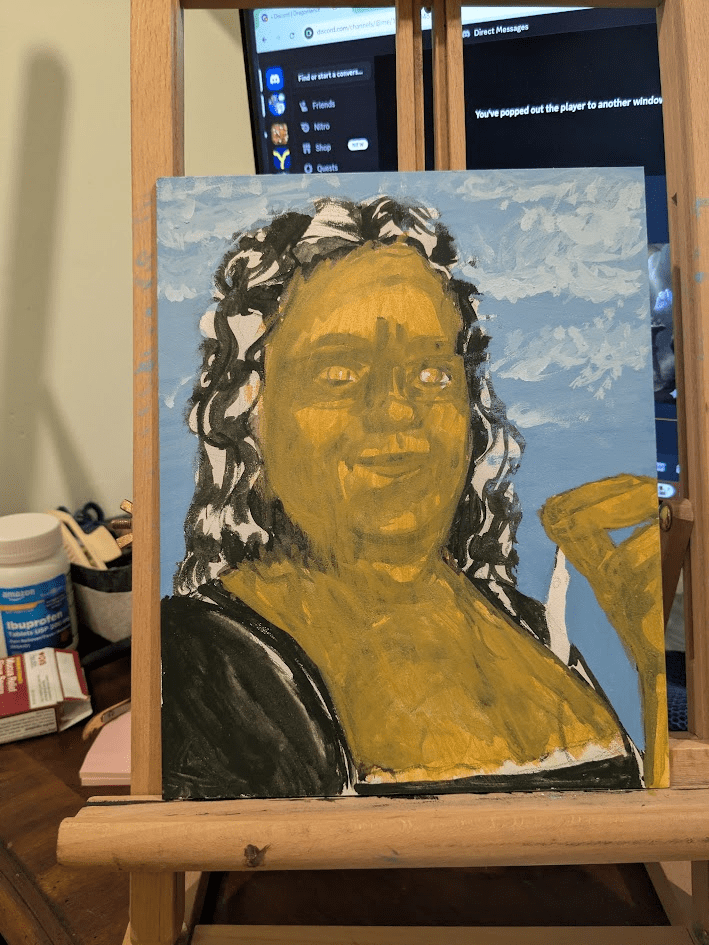
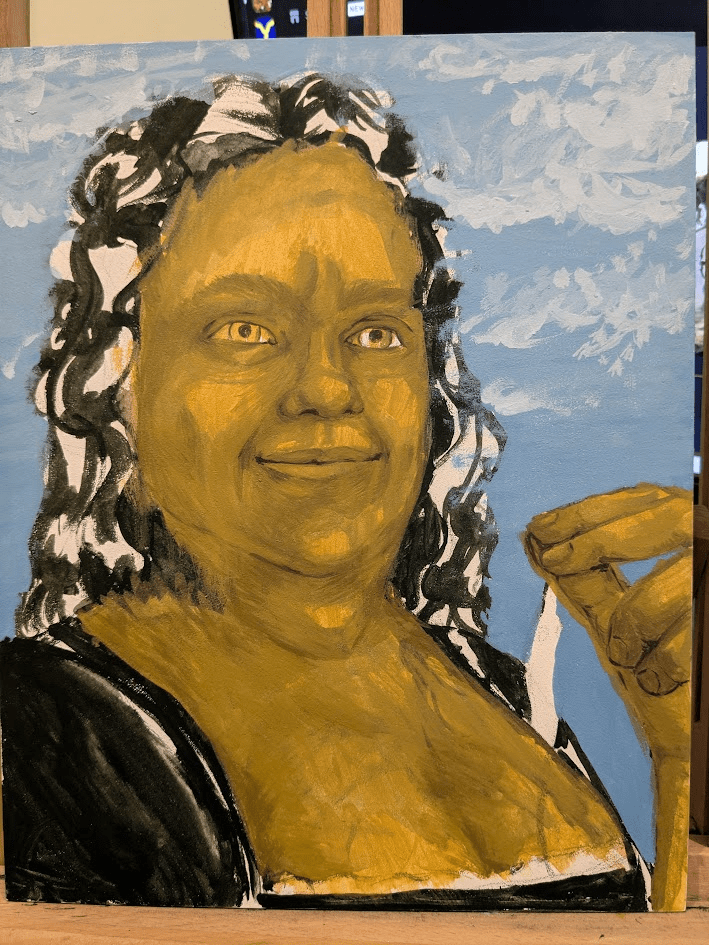
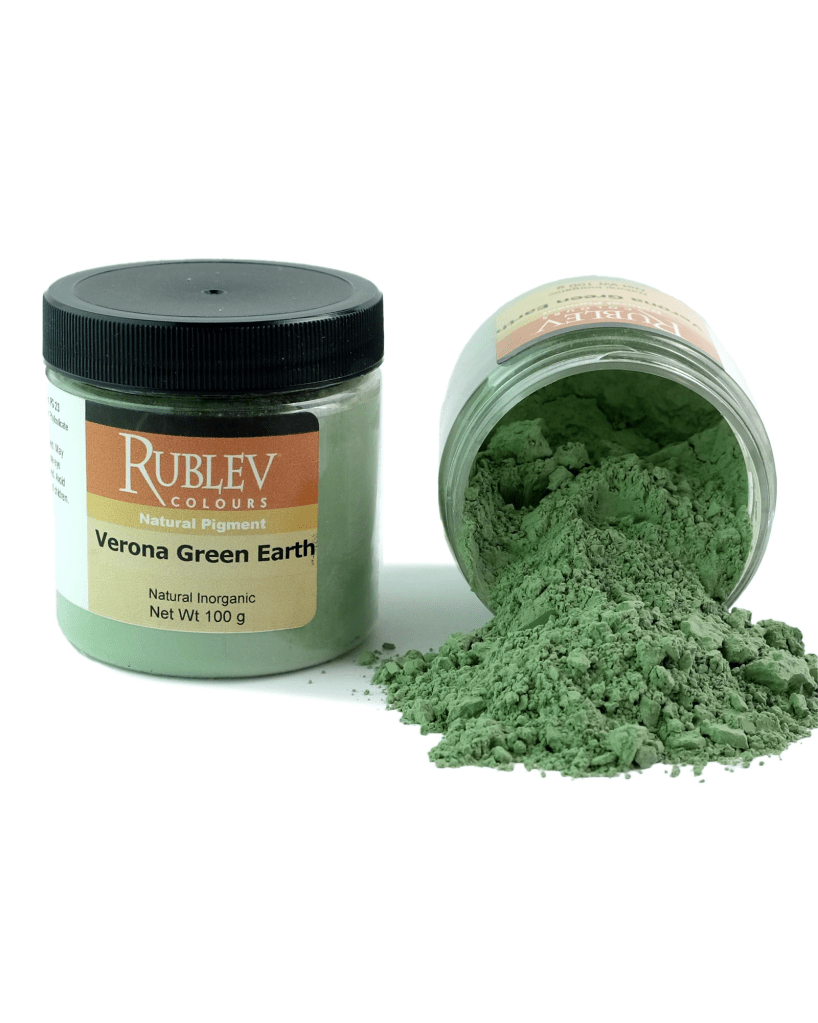
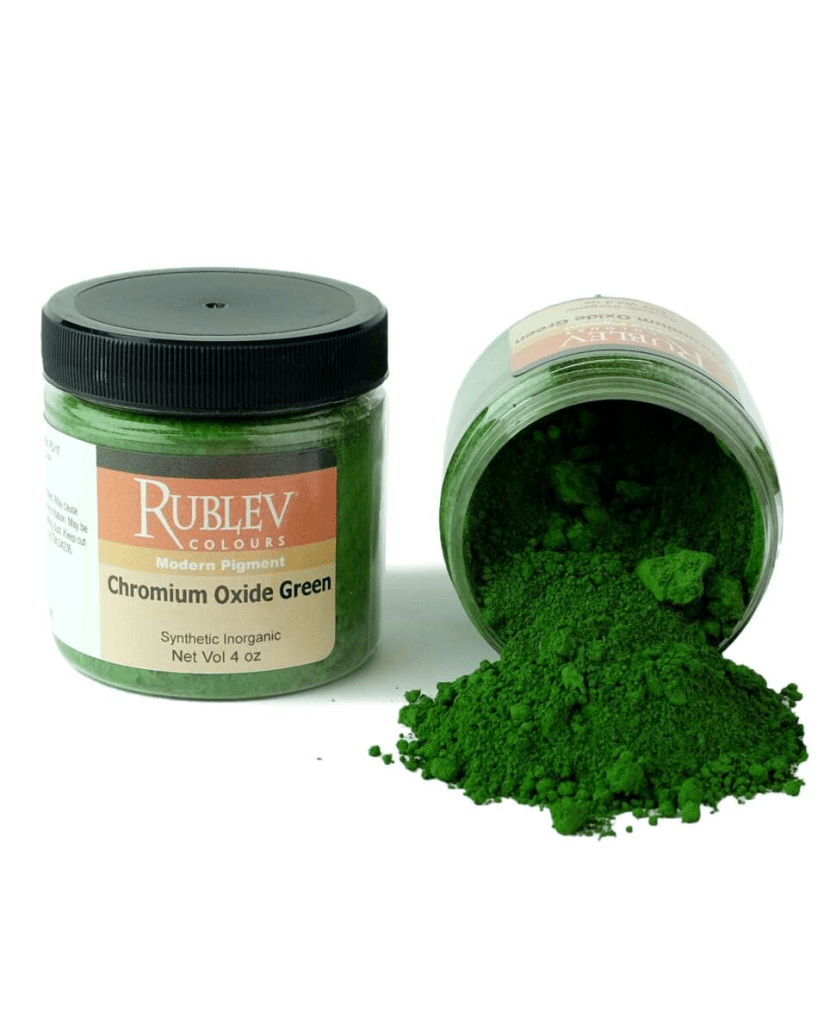
One example of green earth pigment compared to the green pigment I currently use
After this point it was a matter of adding light tones and then refining the blending. Once I got the face to a spot that I felt satisfied I could move on to the clothes and hair. It’s difficult to move between areas with very different colors, since egg tempera can’t be stored, so I really did want to work in focused areas.
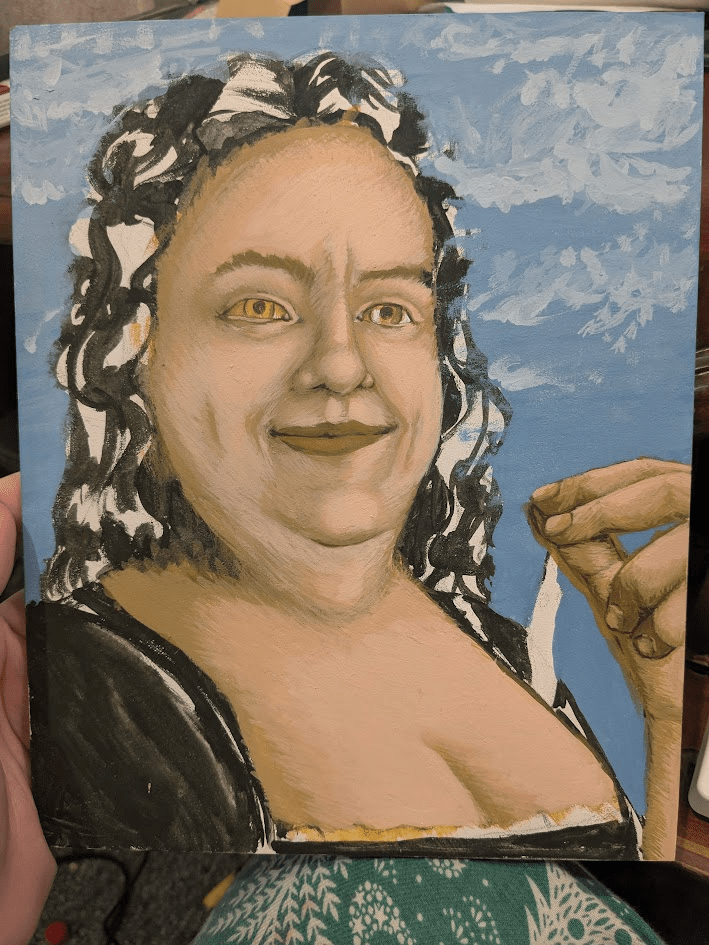
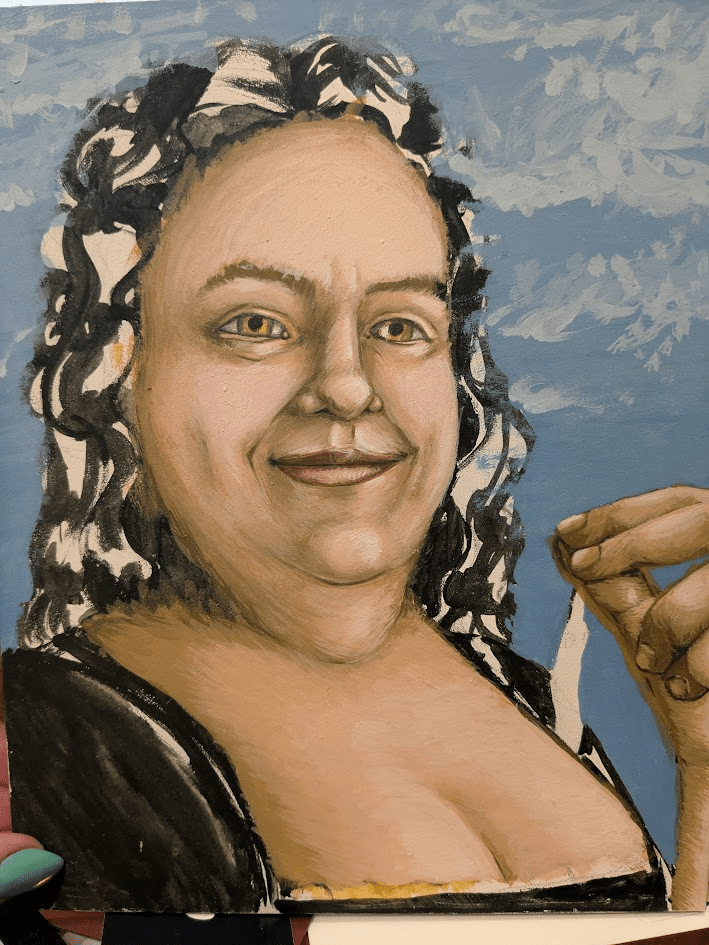
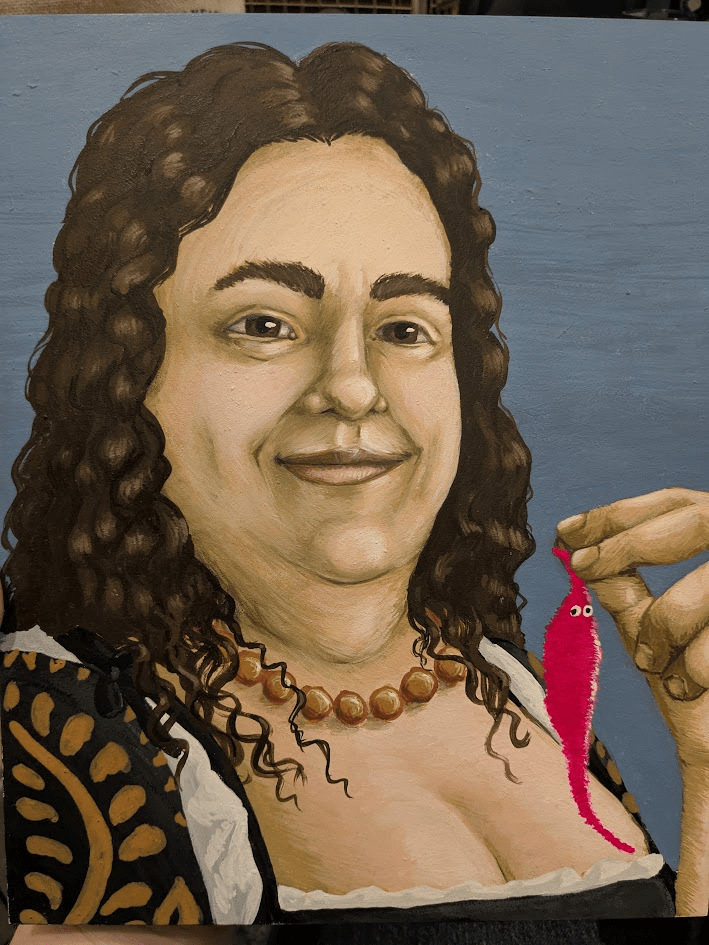
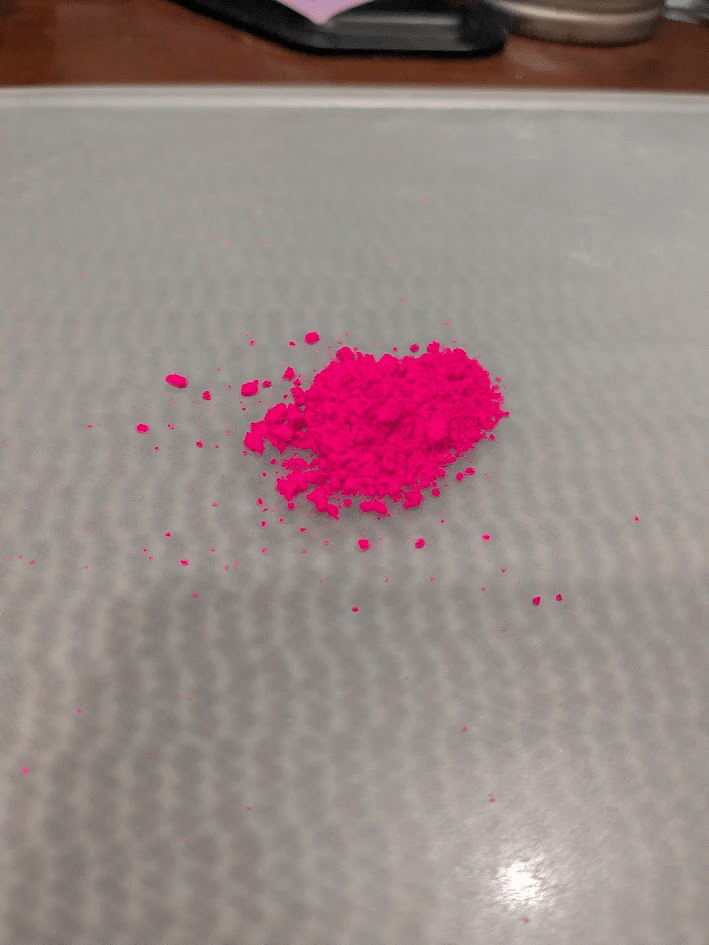
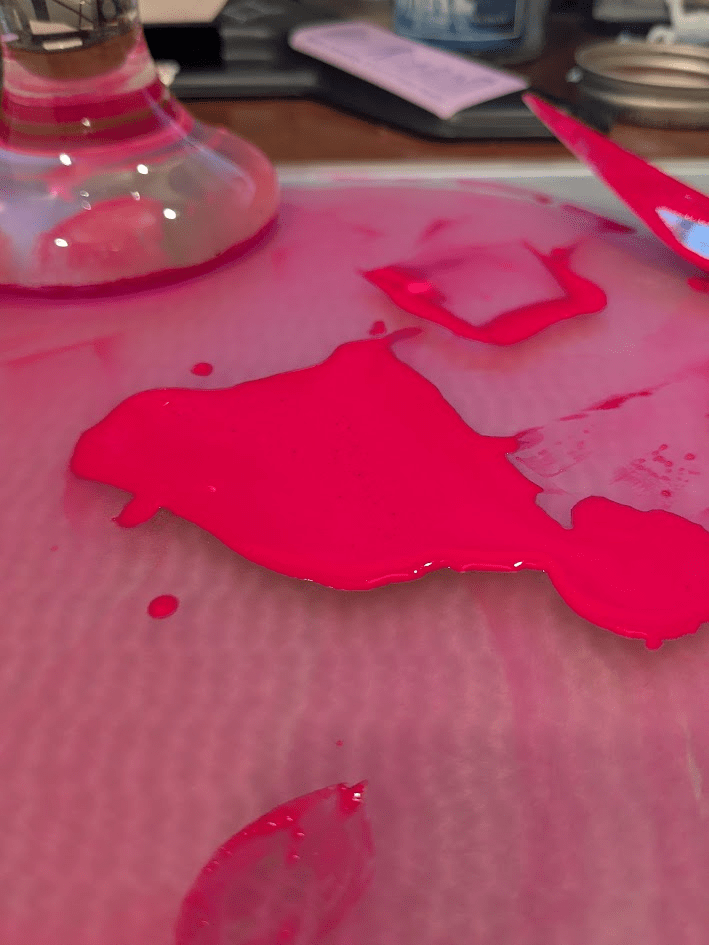
The fluorescent pink pigment I used for the worm was so bright it felt surreal. It’s been hard to capture the brightness of the worm in the finished painting on camera, unfortunately. And it glows under a blacklight!
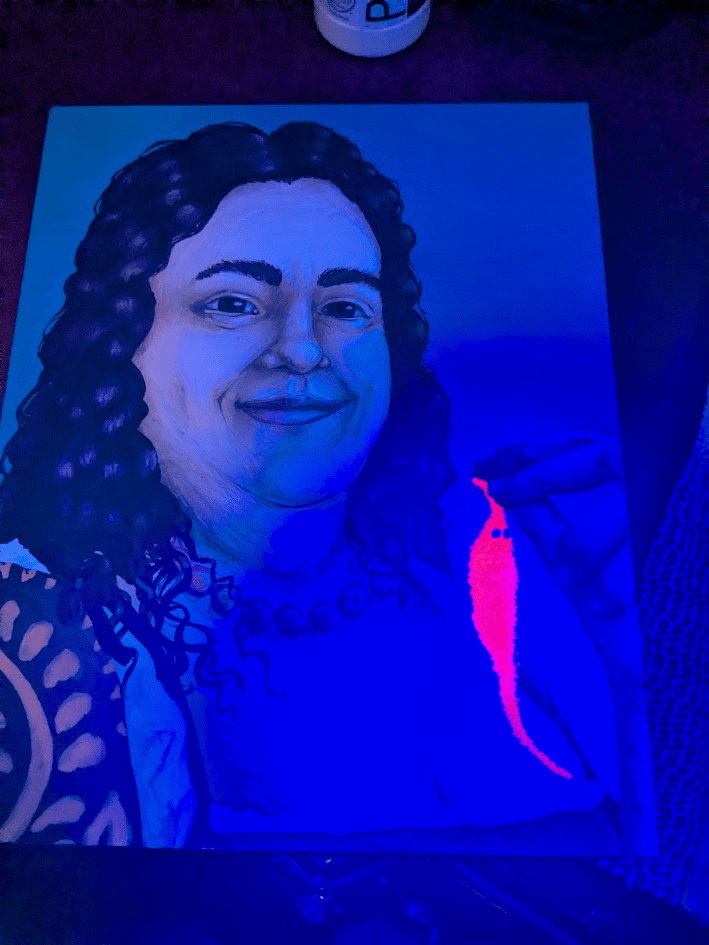
And with that, the portrait was complete! I learned a huge amount during this process, particularly about paint control and consistency. It may also be easier to paint a larger piece (this one is 8″10″). I’m thrilled with the results, and so excited to continue this journey.
And now the worm is clean– Time to Sin


Leave a Reply