
Getting another egg tempera painting started! This time I’m going to venture into a less familiar (and more feline) subject matter. Though animals were sometimes included in portraits during the Italian Renaissance, they weren’t usually the sole subject. But it’s my anachronism, and I’ll do as I like! This portrait is a fun piece, and will rely heavily on modern conveniences, rather than attempting to match historical materials or process.
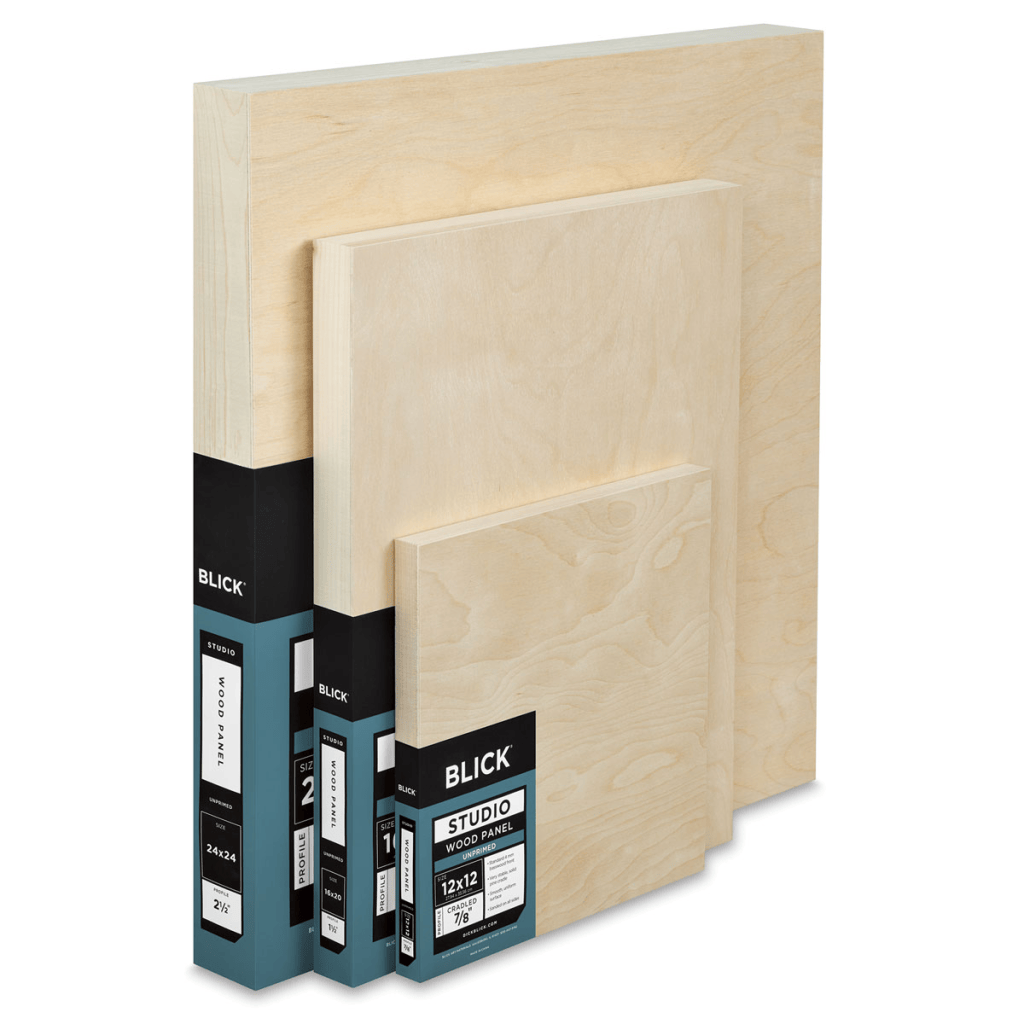
The first steps involved buying a prepared “art board”. These are similar to traditional ground for egg tempera paintings only in that they are rigid, rectangular, and made of wood. They’re also similar in the fact that I, the artist, purchased it from a specialized seller rather than preparing my own board. (During the Italian Renaissance a panel maker/joiner, called a legnaiuoli, would produce the complex panels used). So really, while the material differs, I’ve matched the process perfectly!
The next step is applying the gesso to the board in several thin layers, then sanding it down smooth. I applied a modern gesso and sanded until I was bored of sanding. If I were a true master artist, my apprentices would have handled the making and applying of gesso (from calcium carbonate and glue made from rabbit skin).
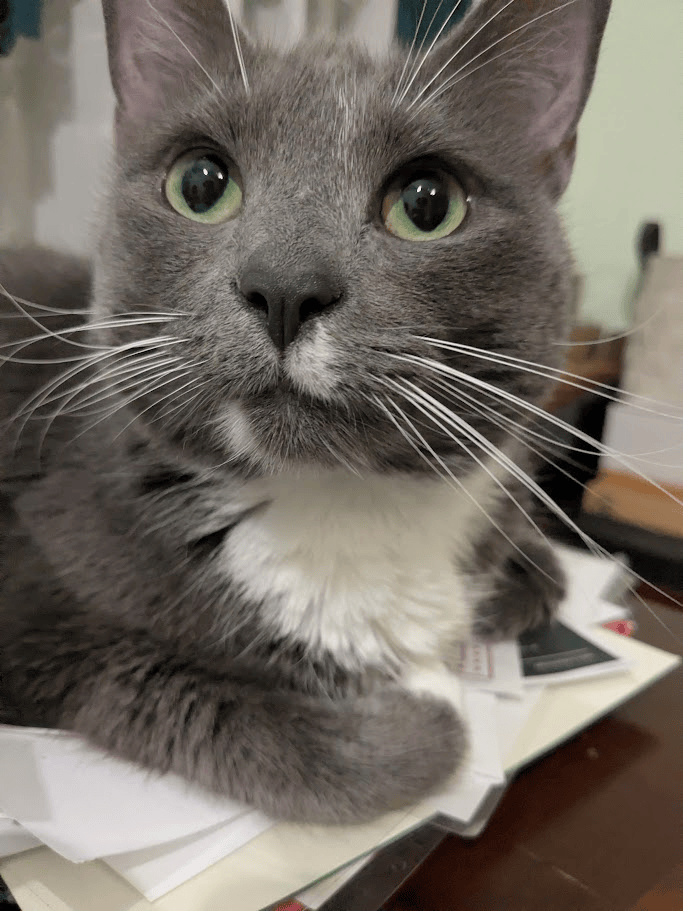
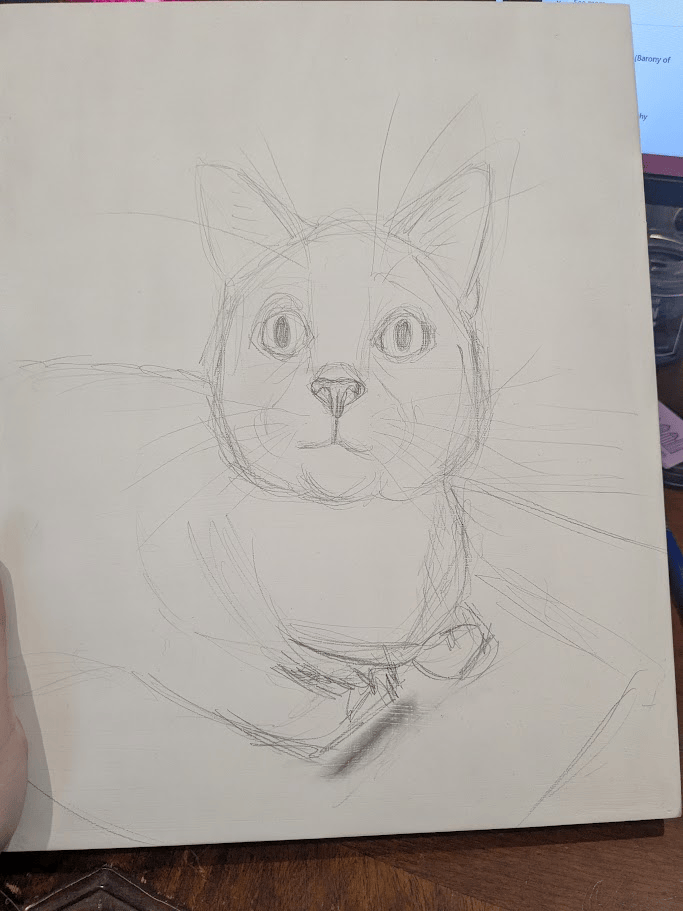
After this I drew my outlines in pencil. My model (the beautiful Waffle) refused to sit for me (she prefers to sit at my desk when she can be on top of my current work), so I relied on several picture I had taken of her.
From here I’ve worked on creating the underpainting. Since egg tempera is fairly sheer when applied, the darker tones of this underpainting will show through somewhat. They also create the guidelines of light and shadow I’ll use as I work.
After that is applying the background. It’s easiest to form the background first before finishing the finer work of the portrait. I kept this quite simple, since I’m working on a fairly tight timeline.
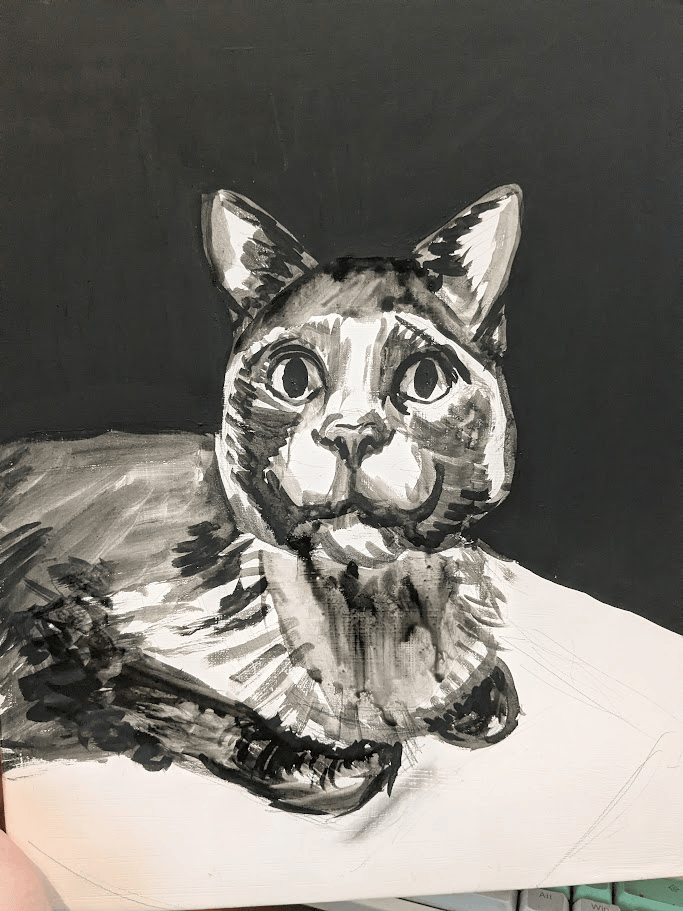
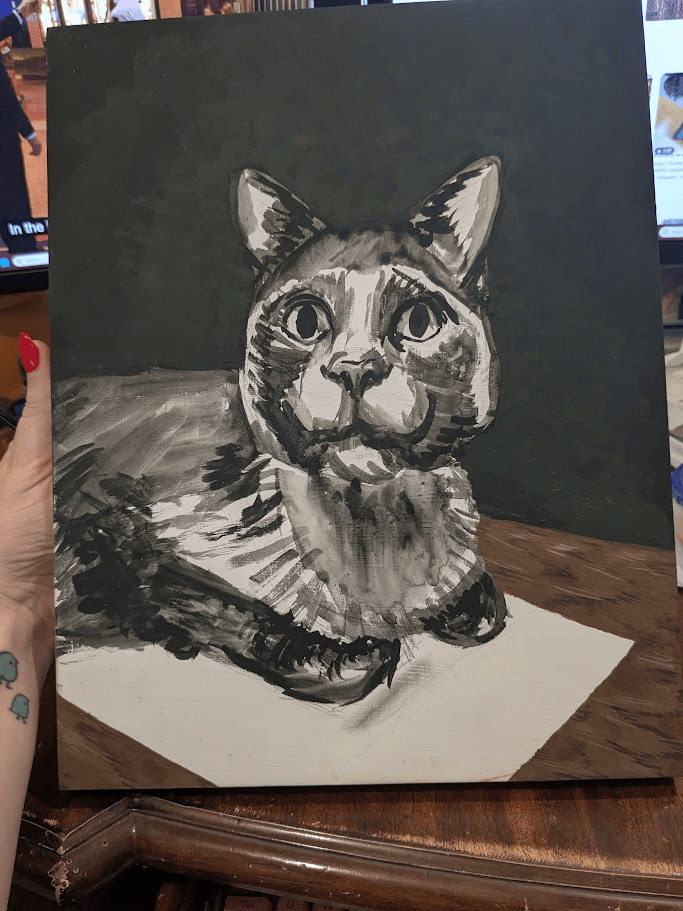
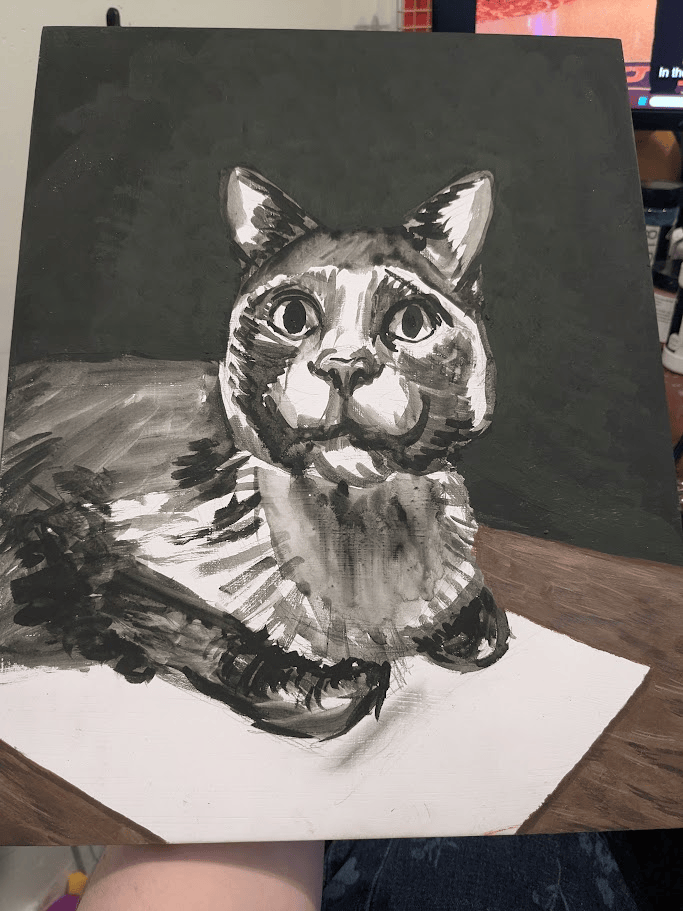
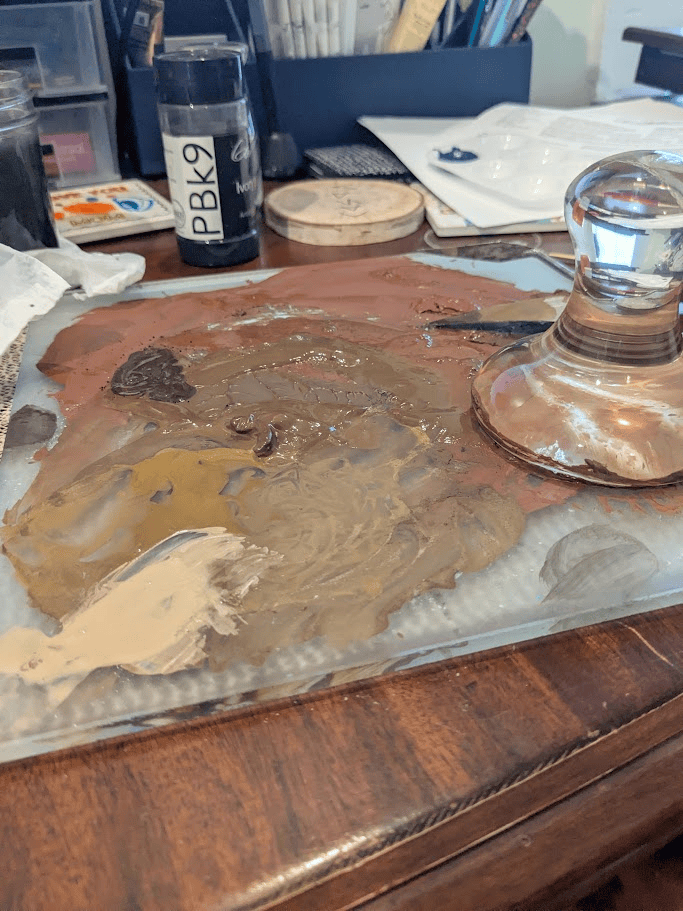
Not bad for a day’s work! I’ve used only a few pigments today, mainly ivory black (which existed historically but was likely less commonly used than vine black or lamp black), green earth/terre vert (a commonly used pigment sourced from, you guessed it, dirt!), pozzuoli red (another pigment harvested from the earth), and a little yellow ochre (yet another earth pigment). As I tend to do, I’ve mixed a huge amount of paint in an effort to create the color I need, most of which will be tragically washed off and discarded. Egg tempera paint can’t be reused and dries very quickly, so anything that I’ve made during a painting session won’t be usable after only a few hours (sometimes even by the end of my painting session). Because the binder is egg yolk it really can’t be stored in a container to prevent drying (because yuck!) Interestingly it’s possible to buy commercially produced tubes of egg tempera, but they contain additional additives for stability. There’s something special about mixing your own paint, though, just like the masters used to.


Leave a Reply